How to Mulch Fruit Trees and Berry Beds to Suppress Weeds
Stop weeds from taking over your berry beds and fruit trees with a two-layer mulch system that works — contractor's paper plus wood chips, applied crop by crop.
How to Mulch Fruit Trees and Berry Beds to Suppress Weeds
Weeds don't beat young fruit trees and berry plants by fighting them directly — they win by stealing water and crowding roots during the hottest weeks of summer. The good news is that a simple two-layer mulch system — contractor's paper laid flat on the soil, covered with a thick layer of wood chips — cuts off that threat before it starts. This post walks through exactly how to apply that system around strawberries, blueberries, raspberries, and young fruit trees, crop by crop, so you can get it done this week.
Quick Answer
The most effective organic weed suppression for fruit trees and berry beds is a two-layer system: contractor's paper (or plain cardboard) laid directly on the soil first, followed by at least 3–4 inches of wood chips on top. The paper starves germinating weeds of light; the wood chips hold the paper in place and retain soil moisture. Both layers are necessary — wood chips alone won't stop determined weeds, but the paper breaks down naturally within a few months so there's nothing to remove later.
Why This Two-Layer System Works
Most weed problems in perennial beds aren't a seed problem — they're a light problem. Weed seeds need light to germinate. Cut off the light, and most species die within a few weeks.
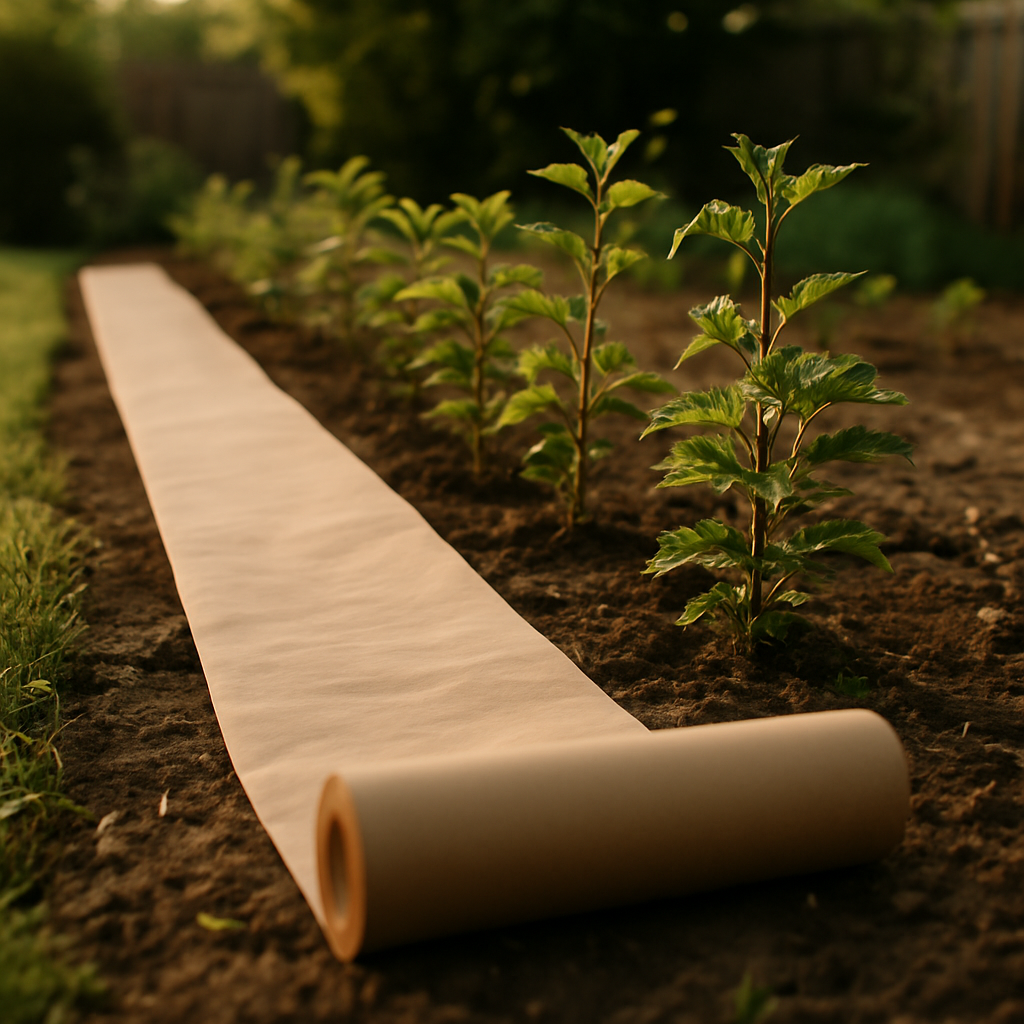
The paper layer handles that job. Contractor's paper on a roll is ideal because you can unroll it across long rows without piecing together individual sheets. Plain cardboard from boxes works on the same principle — just remove any tape or staples first. Either material creates a light-blocking barrier that kills what's underneath without chemicals.
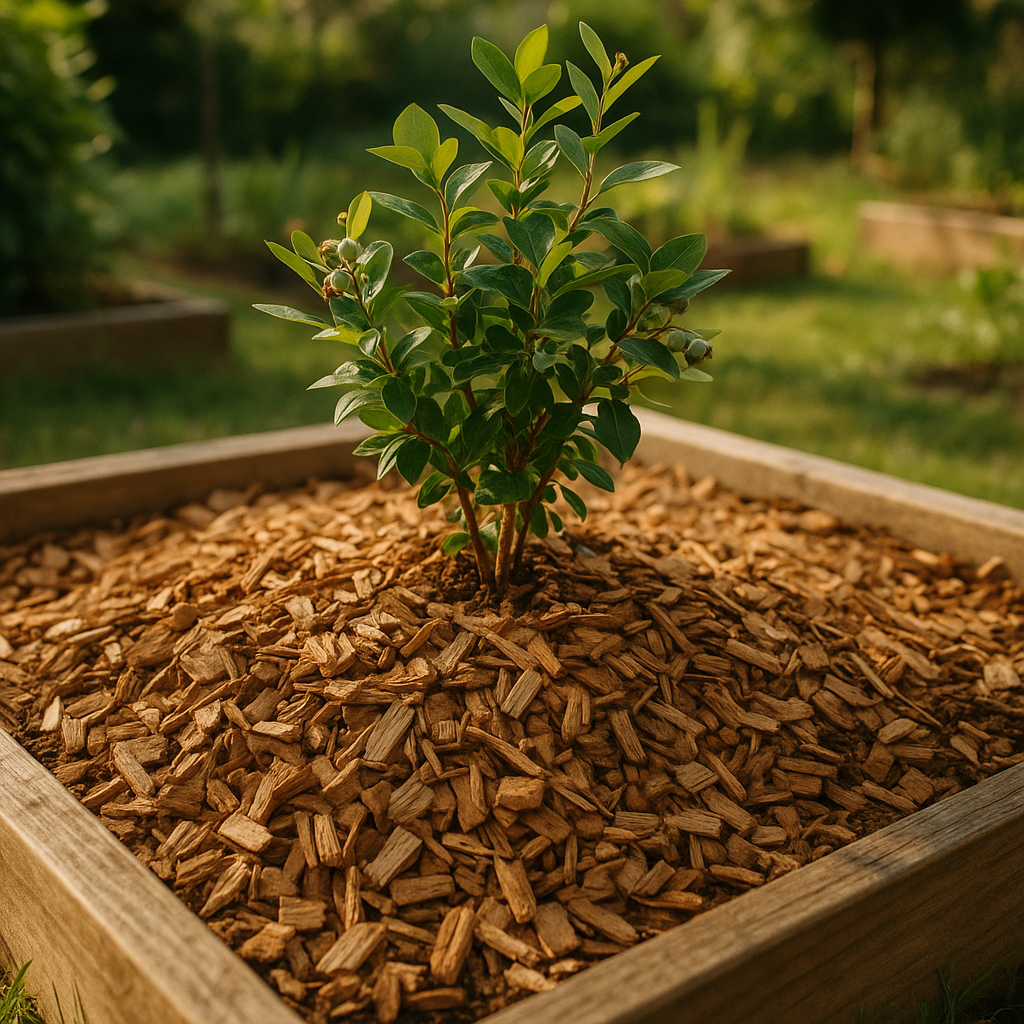
Wood chips do the work on top. A thick layer holds the paper flat against the soil, retains moisture, moderates soil temperature, and slowly breaks down into organic matter that feeds the biology in your root zone. Under a 4-inch layer of chips, soil stays measurably cooler and noticeably moister even after a week without rain — and that matters enormously for shallow-rooted plants like blueberries during a heat wave.
The best time to lay this system is early in the season before weeds get established. But even if weeds are already knee-high, weed-whacking first and then laying paper and chips still works. Don't let an imperfect situation delay you.
Step-by-Step: Mulching Strawberry Beds
- Weed-whack the entire bed down to ground level before touching the paper. Laying paper over tall weeds creates air gaps and uneven coverage — cut everything down first.
- If you need to add compost to planting rows, do it now, before the paper goes down.
- Roll contractor's paper along the paths between rows and around the outer edges of the bed. Overlap every seam by at least 6 inches. Light gaps become weed gaps.
- Cover the paper with wood chips — aim for 3–4 inches minimum. Thin coverage lets determined weeds push through.
- Use a wheelbarrow to move chips into the bed. Wood chips are light enough to manage by hand at home-garden scale.
Keep the paper in the paths and borders, not directly on top of plant crowns. The goal is to cover bare soil, not smother the plants themselves.
Step-by-Step: Mulching Blueberries and Raspberries
- Weed-whack around each plant first, then unroll contractor's paper along bed edges and center aisles.
- Cut slits in the paper where individual plants sit, then tuck the paper closely around each base. This prevents weeds from emerging right at the crown — which is exactly where they're hardest to remove without disturbing roots later.
- Dump bulk wood chips along the row, then spread and hand-pack them around the base of each plant. The last few inches at the crown are the most important to cover well.
- Aim for at least 4 inches of chips over the paper, especially for blueberries.
Blueberries have shallow surface roots that dry out faster than almost any other perennial fruit. Skipping or delaying mulch on blueberries isn't a minor inconvenience — losing established plants to summer drought because mulching got pushed back is a real and preventable setback. If you're prioritizing where to start, mulch blueberries first.
Step-by-Step: Mulching Young Fruit Trees
- Clear weeds and grass from a 3–4 foot radius around the base of the tree.
- Roll or lay paper in that cleared circle.
- Keep both the paper and the wood chips pulled back 2–3 inches from the actual trunk. Moisture held directly against bark creates conditions for rot and pest problems.
- Cover the paper with 4–6 inches of wood chips, working outward from the gap at the trunk to the edge of the cleared circle.
Young trees mulched this way tend to put on noticeably more growth through the season compared to unmulched equivalents. The root zone stays cooler, and consistent moisture between rain events means less stress overall.
Managing Heat Waves Around Fruit Trees
During extreme heat — days pushing above 95–100°F — mulch does a lot of work, but some trees need additional help. Shade cloth is one option, but it carries a real risk: wind events that knock unsecured shade cloth onto young tree branches can crack or split a central leader. If you use shade cloth, stake it firmly and keep it off the tree's structure entirely.
A lower-risk alternative is kaolin clay spray. Kaolin clay is a naturally occurring mineral approved for certified organic production. Applied to leaves and developing fruit, it forms a fine particle film that reduces sun load and heat stress without any physical structure that can fall on the tree. It washes off before eating. Apply before a heat event and reapply after heavy rain.
Common Mistakes
1. Skipping the weed-whacking step before laying paper.
Mulching over tall weeds leaves air pockets under the paper. Weeds continue growing in those pockets and push through faster than expected. Cut everything to ground level first — this step is not optional.
2. Using wood chips without a paper layer underneath.
Chips slow weeds but won't stop them. Persistent species like bindweed, quackgrass, and thistle push through chip-only mulch within weeks. The paper is the actual kill layer. Use both.
3. Laying paper or mulch tight against tree trunks.
Moisture held directly against bark invites fungal problems and creates habitat for borers and other pests. Leave a 2–3 inch clear gap at every trunk, every time.
4. Securing shade cloth loosely over young trees.
One wind event can bring an unsecured shade cloth down hard on a developing branch. Use stakes and ties rated for the cloth's weight, or skip shade cloth on trees entirely and use kaolin clay spray instead.
5. Delaying mulching on blueberries.
Blueberries' surface root systems cannot buffer heat and drought the way deeper-rooted plants can. Mulching these plants late in the season — or not at all — routinely leads to lost plants. Do blueberries first.
FAQs
Can I use regular cardboard instead of contractor's paper?
Yes. Plain cardboard works on the same weed-blocking principle and is often free from grocery or hardware stores. Remove all tape and staples before laying it down. Contractor's paper on a roll is faster for long rows because you don't have to piece together individual sheets, but the result is essentially the same.
How thick does the wood chip layer need to be to actually suppress weeds?
A minimum of 3 inches gives meaningful suppression. Four to six inches is better, especially in hot climates or sandy soils where moisture loss is rapid. Thin layers let light-seeking weeds push through. When in doubt, go thicker.
How long does contractor's paper take to break down, and do I need to reapply it?
Most paper weed barriers break down within a few months depending on moisture and soil biology. By that point, the weeds underneath have typically died from lack of light. The wood chips continue suppressing new weed seeds from above. You can refresh wood chips annually without re-laying paper unless weed pressure becomes severe again.
Why are my blueberry leaves pale even after I mulched them?
Pale or yellowing foliage on blueberries usually signals a nitrogen or iron deficiency, not a mulching problem. Blueberries require acidic soil conditions. Pull back the wood chips slightly, apply an organic fertilizer formulated for acid-loving plants, and re-cover. Consistent moisture from the mulch layer will help nutrient uptake once fertility is addressed.
Is kaolin clay spray safe to use on edible fruit trees?
Yes. Kaolin clay is a naturally occurring mineral approved for use in certified organic production. It forms a fine particle coating on leaf and fruit surfaces that reduces sunburn and deters certain insect pests. It washes off before eating. Apply before a heat event and reapply after heavy rain.
Your Action Plan for This Week
- Weed-whack all perennial beds now — strawberry borders, blueberry rows, raspberry patches, and the area around each fruit tree — before weeds set seed or grow tall enough to create air gaps under the paper.
- Source your materials this week. Contractor's paper is available at most hardware stores on a roll. Wood chips are often available free or at low cost through municipal programs, tree services, or local lumber yards.
- Start with your most vulnerable plants first: blueberries and young fruit trees. Then work outward to raspberries and strawberry bed edges.
- Before the next heat wave, check that any shade cloth over crops is staked firmly and won't fall onto plants in wind. If you have young fruit trees, mix up a kaolin clay spray solution and apply it ahead of high-heat days.
- Watch for pale or slow-growing foliage on fruit trees this season. If you see it, pull back the mulch, apply organic fertilizer to the soil surface, and re-cover — fertilizing through a thick chip layer rarely gets nutrients where they need to go fast enough.
Getting this system in place before summer heat peaks is the difference between a perennial bed that establishes well in year one and one that spends the next two seasons trying to catch up. Start with what you have, cover your most vulnerable plants first, and build from there.
Related blogs
Holes in your leaves? Here's the organic pest control system that matches the right tool to the right pest — before more damage is done.
Mid-summer garden slump is normal — here's how to inventory what's still working and take action now for a strong fall harvest.
Still waiting on green tomatoes? These 5 practical methods shift your plant's energy toward ripening fruit faster — starting this week.
Skip the hilling, still get a real harvest. Here's how deep planting and one mid-season step make raised bed potatoes genuinely low-effort.
Too many tomatoes? Here are 6 practical ways to freeze, can, dry, and sauce your garden harvest so nothing goes to waste.
Break your raised bed into a simple grid and grow 2–3x more food from the same space. Here's exactly how to set it up.
No yard? No problem. Learn how to grow tomatoes, peppers, and more in 5-gallon buckets with the right soil, watering, and fertilizing strategy.
Wood chips can build incredible soil — or wreck a bed. One mistake makes all the difference. Here's what actually works.
Stop weeds from taking over your berry beds and fruit trees with a two-layer mulch system that works — contractor's paper plus wood chips, applied crop by crop.
Mid-summer struggle is seasonal, not failure. Here's how to inventory what's still working and set up a strong fall garden right now.