Square Foot Gardening: Grow More Food in Less Space
Break your raised bed into a simple grid and grow 2–3x more food from the same space. Here's exactly how to set it up.

Square Foot Gardening: Grow More Food in Less Space
Staring at a raised bed and not knowing where to start is one of the most common reasons beginner gardeners underplant or leave half the bed empty. Square foot gardening solves this by breaking the bed into a simple grid — each 1-square-foot section gets a set number of plants based on crop size, and you plan one square at a time instead of trying to map the whole bed at once. The result is a densely planted, productive bed that's easier to manage, easier to weed, and far more efficient than traditional row gardening. This guide covers exactly how to build the grid, how many plants fit per square, and the strategies that help a small bed produce far more than its footprint suggests.
Quick Answer
Square foot gardening divides a raised bed into a grid of 1-square-foot sections, each planted with a specific number of plants based on mature crop size: 1 tomato or kale, 4 lettuces, 9 bush beans, or 16 carrots per square. A string-and-screw grid built into the bed frame keeps spacing accurate and planning visual. Pairing the grid with succession planting — replacing a finished crop within a day or two of pulling it — means each square can realistically produce two to three different crops per season without expanding the bed footprint. The method works in any raised bed, container, or small-space garden.
How to Set Up a Square Foot Grid in a Raised Bed
The grid is the backbone of the whole system. Once it's in place, planning and planting become dramatically more straightforward.
Step 1: Measure the Interior, Not the Outside Frame
A thick wooden frame, sitting rail, or metal lip can eat several inches off the true growing space. Measure the interior planting area — what's actually available for roots and soil. A 4×8 bed with 1.5-inch walls has a usable interior closer to 3'9" × 7'9".
If you're working with a metal raised bed like the 17" Tall 9 In 1 Large Modular Metal Raised Garden Bed Kit, take a moment to account for the lip before you mark anything. Getting this measurement right once saves you from a grid that's off by a full square.
Step 2: Mark 1-Foot Intervals Along Each Interior Edge
Run a tape measure along the inside face of the frame and mark every 12 inches with a pencil or small notch. Do this on all four sides.
Step 3: Install the Grid
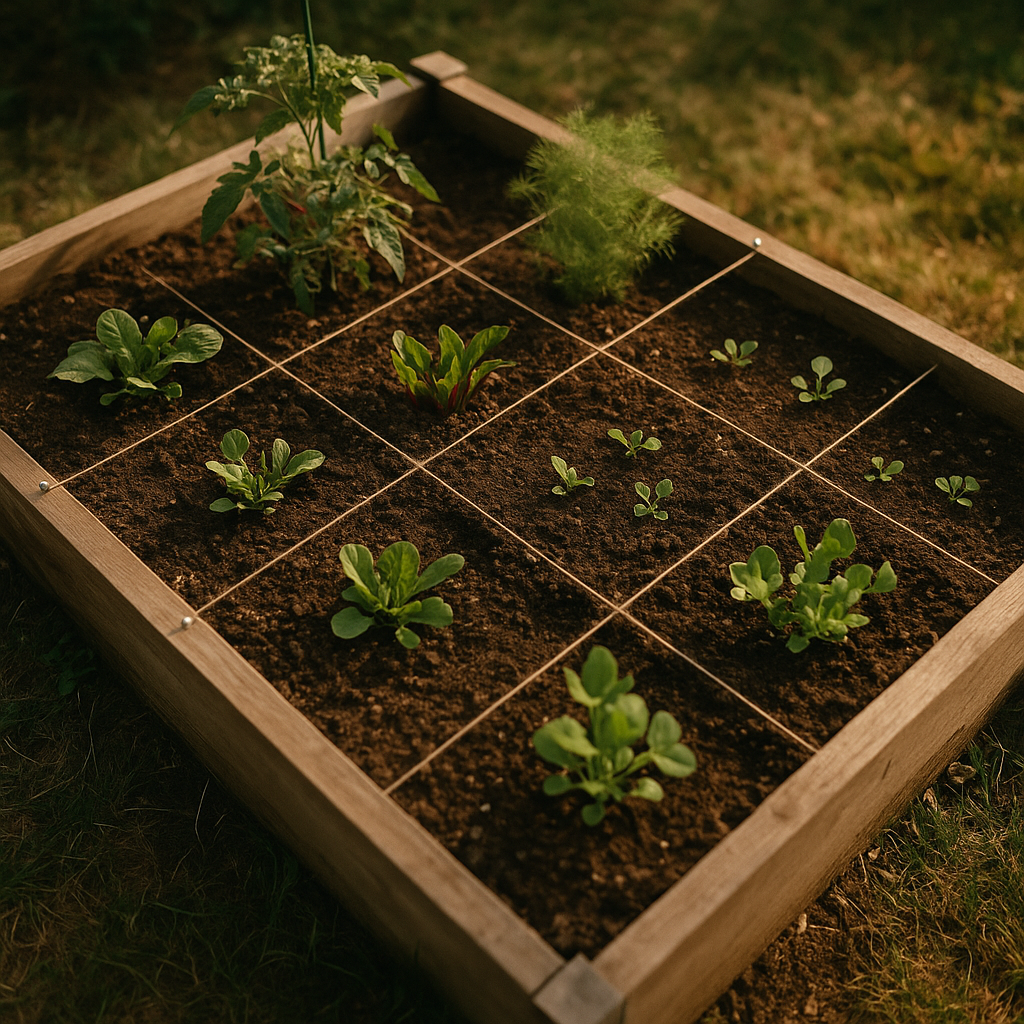
For wooden beds: at each 1-foot mark, drive a screw into the top inside edge of the frame (pre-drill to prevent splitting). Run garden twine from each screw to its opposite counterpart, pulling it taut. You'll end up with a clean, visible grid of squares you can see while planting.
For metal beds or beds without flat top edges: cut a piece of scrap lumber or plywood into a 1-square-foot template. Press it into the soil at each position, mark the corners with a fingertip, then move it to the next section. It takes a few extra minutes, but it works just as well.
Step 4: Map the Bed on Paper Before Anything Goes In the Ground
Sketch the grid, assign crops to each square, and check sun orientation before you place a single transplant. This five-minute step prevents hours of rearranging later. Note where tall crops will go (north side — more on that below) and flag any squares you plan to succession plant.
Plant Spacing by Crop — Getting the Numbers Right
Spacing in square foot gardening is based on mature plant size. The goal is to fill each square with as many plants as can grow without competing for light, water, or root space. Here are the most practical numbers to know:
- 1 plant per square: kale, broccoli, peppers, eggplant, indeterminate tomatoes (trained vertically), cabbage
- 4 plants per square: lettuce, Swiss chard, most leafy greens, basil
- 9 plants per square: bush beans, spinach, peas
- 16 plants per square: carrots, radishes, beets, green onions
For small-seeded crops like carrots and radishes, press shallow divots into the soil at even intervals within the square — a finger works fine — and drop one or two seeds per divot. Thin to the strongest seedling if both germinate. For transplants like lettuce, peppers, and brassicas, set them at the center point of their designated space and firm the soil around the base.
Getting spacing right from the start means no thinning scramble two weeks later, and far fewer gaps where weeds can get a foothold. The Square Foot Gardening book by Mel Bartholomew is the standard reference for a full crop-by-crop list and worth having on your shelf.
Vertical Growing as a Space Multiplier
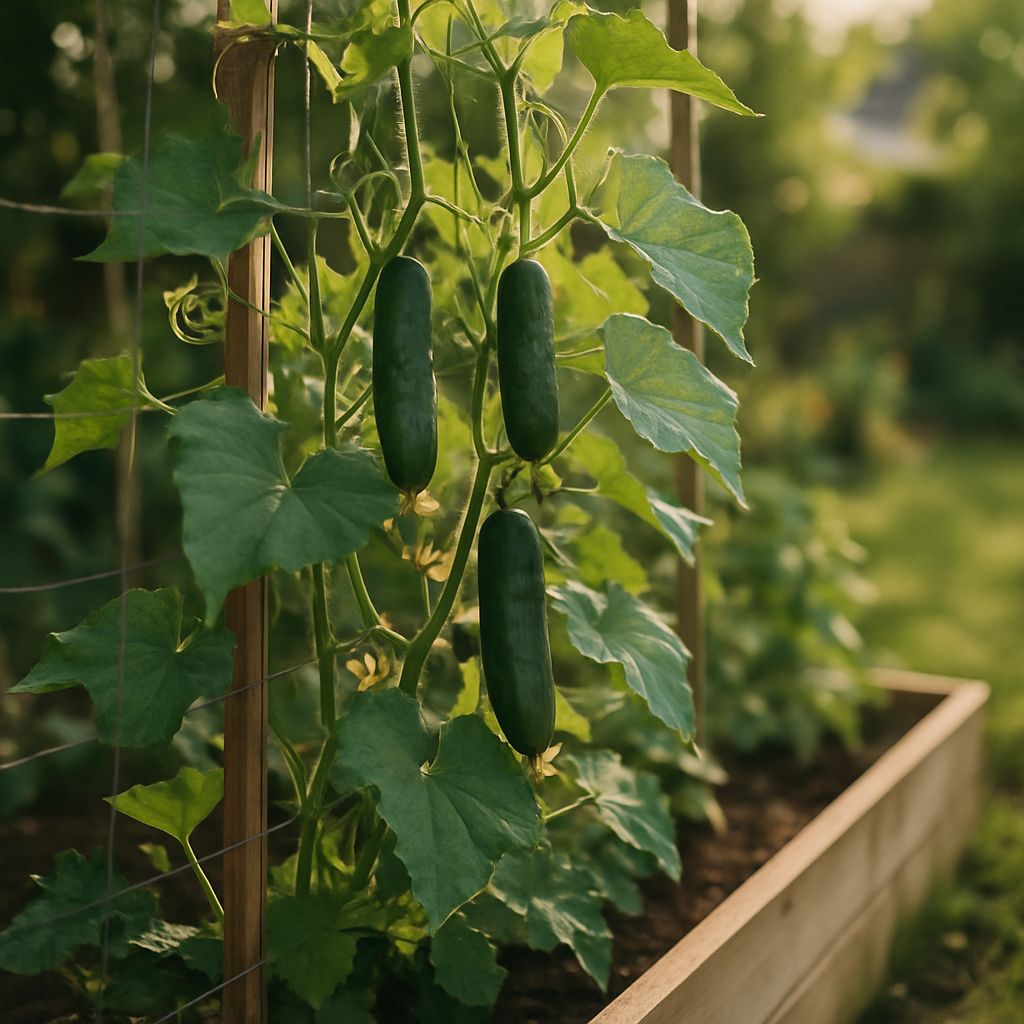
An indeterminate tomato allowed to sprawl can take over 16 or more square feet of ground space. Trained vertically on a trellis, that same plant occupies a single square foot. That's not a marginal difference — it's the difference between one crop crowding out your whole bed and a diverse mix of vegetables growing in the same footprint.
Vertical growing also benefits plant health. Better airflow around foliage reduces humidity and the disease pressure that comes with it. Fruit at eye level is easier to spot, easier to harvest, and less likely to rot unnoticed on the ground.
Crops that respond well to vertical training in a square foot bed:
- Indeterminate tomatoes (single-stem or pruned to two leaders)
- Cucumbers
- Pole beans
- Peas
Place all tall vertical crops on the north side of the bed. As the sun angle drops through late summer and into fall, north-side plants cast their shadows behind them — away from the rest of the bed — rather than across it. This one layout decision protects your other plants' light without any structural changes required.
If you're working in a smaller or movable setup, the Classic Rolling Garden Bed - 1.75' x 8' is well-suited to vertical crops — you can reposition it to follow the sun or keep tall plants from shading a patio or balcony setup.
Succession Planting — Making Every Square Work Twice
An empty square after harvest is missed growing time. The goal is to have a replacement crop ready to go in the ground within a day or two of pulling a finished one.
Here's a practical example: radishes are sown in early spring and harvested in 25–30 days. While those radishes are growing, start a pepper transplant indoors. The moment the radishes come out, the pepper goes straight in — same square, same afternoon. The turnover takes about two minutes.
With consistent succession planning, each square can realistically produce two to three different crops in a single season. A 6-square-foot bed managed this way functions more like 12–18 square feet in terms of total food produced.
Keep a tray of backup seedlings going at all times. Lettuce, herbs, and quick greens are ideal succession crops because they start fast and transplant easily. When a square opens up, you fill it the same day — not three weeks later while you wait for seeds to germinate.
Interplanting and Staggered Timing
Interplanting places a fast-maturing crop in the corners of a square already occupied by a slow-maturing one. While a pepper plant spends its first six weeks establishing, the corners of that same square can each hold a radish or small lettuce start — both of which will be harvested long before the pepper needs that space.
Staggering the same crop by one to two weeks spreads the harvest window and prevents a glut. Sow half your carrot squares this week, the other half in ten days, and your harvest stretches over several weeks instead of arriving all at once.
Dense planting does a lot of weed suppression on its own. When plant canopies close together, they block light at the soil surface and make it hard for weed seeds to germinate. A thin layer of mulch around plants before summer heat arrives handles most of what remains. In a well-managed square foot bed, hand-weeding rarely takes more than a few minutes a week.
If you're gardening in a smaller space or want the flexibility of an elevated setup, the JP's Elevated Garden Bed 2' x 8' works well for gridded planting — the long, narrow layout makes it easy to reach every square from either side without compressing the soil.
Common Mistakes
Measuring from the outside of the frame. Always measure the interior planting area. A thick frame, sitting rail, or metal lip can reduce the true growing space by several inches per side, throwing off the entire grid.
Leaving empty squares after harvest. Every day a square sits empty is lost growing time. Start succession crops before the current crop finishes — not after you've already pulled it.
Placing tall crops on the south side of the bed. Tall crops on the south side cast shadows across the entire bed as the season progresses. Tall crops go north, short crops south. Every time.
Letting vining crops sprawl. A cucumber or indeterminate tomato left to sprawl can consume 8–16 squares that could be growing other food. Train them up — even a simple stake or wire cage gets the job done.
Planting everything at once. Sowing all your lettuce or all your carrots in one go leads to a harvest crunch followed by a bare bed. Stagger the same crop by one to two weeks to keep harvests coming steadily through the season.
FAQs
How many plants actually fit in one square foot?
It depends entirely on the crop. Large plants like tomatoes, peppers, and kale get one square each. Medium plants like lettuce fit four per square. Small-rooted crops like carrots and radishes can fit sixteen per square. The Square Foot Gardening book by Mel Bartholomew is the best reference for a full crop-by-crop list.
Do I need a wooden raised bed for this method to work?
No. The grid method works in any bed. For metal beds or beds without a flat top edge, cut a 1-square-foot wooden template and use it as a physical guide — press it into the soil to mark each section before planting.
Can I use square foot gardening in containers or very small spaces?
Yes. A single 2×4 container bed can be fully gridded and managed the same way as a large in-ground bed. The principles are identical regardless of scale.
How do I handle weeds in a square foot garden?
Dense planting naturally suppresses most weeds by blocking light at the soil surface. Adding mulch before summer heat arrives handles nearly everything that remains. Because the growing area is compact and well-defined, any hand-weeding that comes up typically takes only a few minutes.
What should a beginner plant first in a square foot garden?
Start with crops you actually eat, and choose forgiving ones: lettuce, radishes, herbs, and bush beans are all solid entry points. Add one or two plants you're curious about — having something new in the bed keeps you engaged and returning to the garden regularly.
Your Action Plan This Week
- Measure your interior bed dimensions and build a 1-foot grid using screws and twine (wooden beds) or a cut wooden template (metal beds). Do this before anything gets planted.
- Map the bed on paper. Assign crops to each square, put tall crops on the north side, and plan at least one succession swap per square so you're thinking ahead from day one.
- Start a succession tray now. Get lettuce, herbs, or another fast grower going indoors or in a nursery pot so you have transplants ready the moment a square opens up.
- Mulch before summer heat arrives. Once plants are established and starting to spread, lay mulch around them to suppress weeds and hold moisture. This single step saves more time than almost anything else you'll do.
- Start a garden journal. Write down planting dates, varieties, and spacing for every square. One season of notes will make next year's planning faster, smarter, and far less stressful.
Related blogs
Holes in your leaves? Here's the organic pest control system that matches the right tool to the right pest — before more damage is done.
Mid-summer garden slump is normal — here's how to inventory what's still working and take action now for a strong fall harvest.
Still waiting on green tomatoes? These 5 practical methods shift your plant's energy toward ripening fruit faster — starting this week.
Skip the hilling, still get a real harvest. Here's how deep planting and one mid-season step make raised bed potatoes genuinely low-effort.
Too many tomatoes? Here are 6 practical ways to freeze, can, dry, and sauce your garden harvest so nothing goes to waste.
Break your raised bed into a simple grid and grow 2–3x more food from the same space. Here's exactly how to set it up.
No yard? No problem. Learn how to grow tomatoes, peppers, and more in 5-gallon buckets with the right soil, watering, and fertilizing strategy.
Wood chips can build incredible soil — or wreck a bed. One mistake makes all the difference. Here's what actually works.
Stop weeds from taking over your berry beds and fruit trees with a two-layer mulch system that works — contractor's paper plus wood chips, applied crop by crop.
Mid-summer struggle is seasonal, not failure. Here's how to inventory what's still working and set up a strong fall garden right now.