What to Plant in August for a Fall Garden That Keeps Producing
August isn't too late — it's prime time for fall planting. Learn which crops to plant now, how to time them, and the tricks that actually work.
What to Plant in August for a Fall Garden That Keeps Producing
August feels like the end of the growing season, but for prepared gardeners it's actually the start of a second wave. Fall crops are some of the most rewarding harvests of the year — fewer pests, cooler temperatures, and flavors that genuinely improve after a light frost. The key is knowing exactly how many frost-free days you have left and matching that number to the right crops. Get that calculation right, and you can keep beds full and productive well into November or beyond. This guide walks through 20+ crops you can still plant in August, organized by type, with specific timing guidance and germination tricks for each one.
Quick Answer
Most fall crops are planted specifically in late summer — August is not too late, it's right on time. Calculate your planting window by looking up your first expected frost date and subtracting today's date. Use that frost-free day count to match crops to your timeline: frost-sensitive vegetables need to go in early August with fast-maturing varieties, while leafy greens, root crops, brassicas, and cold-hardy winter greens can follow in staggered waves through the end of the month.
Step 1 — Calculate Your Planting Window First
Before you touch a seed packet, look up your first expected frost date. Search your zip code alongside "first expected frost date" and write that date down. Then count from today to that date. That number — your frost-free day count — drives every planting decision that follows.
Here's how to use it as a filter:
- Find the days-to-maturity on the seed packet for any crop you're considering.
- Add 10 days as a buffer — fall days are shorter and slightly cooler, so growth slows down compared to what the packet promises.
- If that total number is less than or equal to your frost-free day count, you're good to plant. If it's over, choose a faster variety or skip that crop.
For example, if you have 75 frost-free days left and a squash variety takes 70 days to mature, that 5-day margin is too thin. You want at least that 10-day cushion. This is the most important calculation in fall garden planning — it takes five minutes and prevents a lot of wasted effort.
Last-Call Frost-Sensitive Crops — Plant in Early August Only
Summer squash, cucumbers, and bush beans can still go in the ground during the first half of August. But variety selection is just as important as timing here. A 70-day zucchini planted in early August is a gamble in most zones. A 50-day summer squash planted the same day can still deliver a meaningful final harvest flush before the season turns.
The same principle applies across the board:
- Summer squash: Target varieties around 50 days rather than 70-day types.
- Cucumbers: Look for 50-day varieties over 76-day ones.
- Bush beans: Many bush bean varieties mature in 50–55 days, which makes them a reasonable early-August plant.
These crops won't carry you through fall. They're a final push — a bonus harvest before you shift fully into cold-season mode.
Leafy Greens — Timing Depends on Heat Tolerance
Not all leafy greens go in at the same time. In August, heat tolerance determines when each one should be planted.
Heat-tolerant greens — kale, Swiss chard, and lettuce — can go in during the first half of August. They establish well while it's still warm and then surge as temperatures drop. These are workhorses that will keep producing for months.
Heat-sensitive greens — spinach, arugula, and mustard greens — are better held until mid-to-late August. Planting them too early means they're more likely to bolt or just fail to germinate in warm soil.
Spinach is worth calling out specifically because so many gardeners struggle with it in summer. Spinach seeds have a built-in resistance to germinating in warm conditions. The fix is a cold-treatment:
- Place seeds in the freezer for 2–3 days.
- Move them to a damp paper towel inside a sealed bag in the refrigerator for another 2–3 days.
- Plant as normal once the chilling period is done.
This mimics the natural cold exposure spinach would get over winter, and it dramatically improves germination rates in late summer conditions. It's a small extra step that makes a real difference.
Root Crops — Always Direct Sow
Carrots, beets, radishes, and turnips all belong in your August planting plan. And all of them must be direct sown — transplanting damages the roots before they even get started.
Radishes are the easiest win in this group. They mature quickly (many varieties in 25–30 days), handle frost well, and can be sown in successive rounds every two weeks for continuous harvests deep into fall. If you plant nothing else this August, plant radishes.
Beets benefit from a 12-hour soak before planting. The seed coat is tough, and soaking it helps water penetrate when the soil is warm and dry. This one extra step noticeably improves germination consistency.
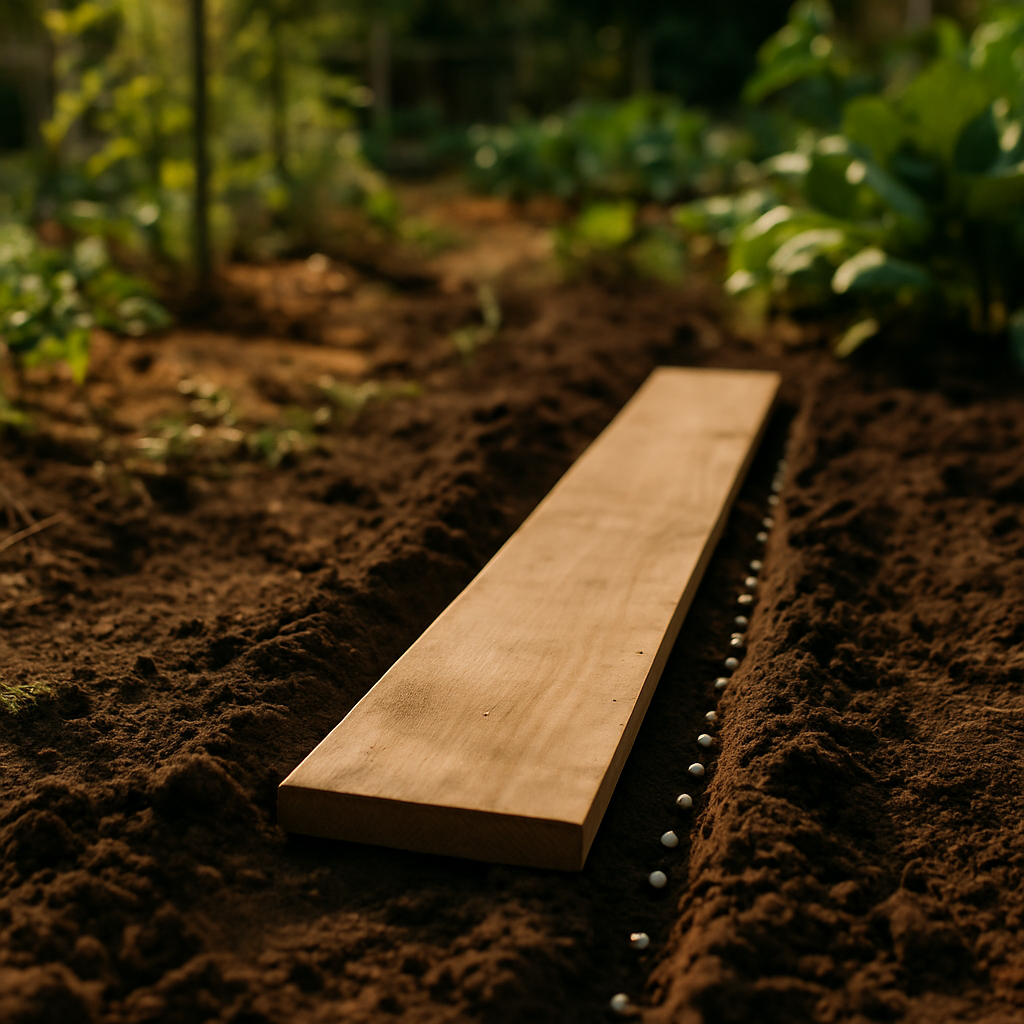
Carrots are the most demanding. They must be surface-sown — covered with just a thin layer of soil or none at all — and kept consistently moist for up to two weeks. That's a real challenge in August heat. The solution is the board trick:
- Surface sow your carrot seeds and water them in.
- Lay a flat board over the seeded row.
- Check underneath daily.
- Remove the board the moment you see the first sprouts emerging.
The board locks moisture in without blocking light from seedlings that haven't emerged yet. It works far better than mulch for carrots, which can struggle to push through even a light layer of covering.
Brassicas — The Fall Garden's Heavy Hitters
Cabbage, broccoli, and cauliflower are cold-hardy plants that actually perform better in fall than spring. Their flavor genuinely improves after light frosts — broccoli and cabbage especially. August is the right time to get them started.
The key is starting brassicas in trays in a protected nursery area rather than direct sowing them into the main garden. In late summer, garden beds are still hot, pest pressure is high, and whiteflies in particular can devastate young brassica seedlings. A shaded nursery spot with insect netting over it gives transplants a much better start.
Plant a mix of early and later-maturing varieties to spread the harvest out. A 65-day cabbage and an 85-day cabbage planted on the same day will produce at different points in fall, which is exactly what you want.
Once transplants are established and summer crops have been pulled, move them into the open beds. They'll take off in the cooler conditions.
Peas — Wait Until Mid-August
Peas planted too early in August often struggle. The residual heat stresses young seedlings, and germination suffers. Aim for the second week of August, when nights in most zones start to cool noticeably.
Soak pea seeds for 24 hours before planting to soften the seed coat and improve germination consistency. Peas are cold-tolerant and will keep producing well into fall once they hit their stride. Giving them that head start with the soak is worth the extra step.
Cold-Hardy Greens — Plant Now, Harvest All Winter
This group often gets overlooked, but it's where fall gardening gets genuinely exciting. Crops like claytonia, tatsoy, bok choy, mâche, sorrel, collard greens, and green onions can be planted in August and some even into September. Several of them will actively grow through snow with minimal protection.
Tatsoy is particularly impressive — it's exceptionally cold-hardy and will survive conditions that knock back many other greens. As summer crops finish and beds open up, tuck these cold-hardy greens into those spaces immediately. Mulch around the roots to insulate and extend the growing window. A simple low tunnel over the bed can push harvests well into December.
Nursery Setup for Fall Transplants
Starting brassicas and leafy greens in a protected nursery area — trays or small containers set up outside in a shaded spot — gives you three real advantages:
- Pest protection: A hoop frame covered with insect netting keeps whiteflies and other late-summer pests off vulnerable seedlings.
- Heat management: Shade cloth on the hottest days prevents seedlings from cooking or bolting before they're ready to transplant.
- Timing flexibility: Summer crops can stay in the main beds until they're fully finished. Transplants are already established and ready to go the moment a bed opens up.
A simple hoop frame laid flat on the ground and covered with netting or shade cloth is all you need. It doesn't have to be elaborate to work well.
Common Mistakes
1. Planting frost-sensitive crops without checking the math.
Always add at least a 10-day buffer to the days-to-maturity number. Fall days are shorter and growth slows — the packet estimate is optimistic for late-season planting.
2. Choosing slow-maturing varieties for a late planting.
A 76-day cucumber planted in early August is unlikely to produce before frost in most zones. Variety selection matters as much as timing. Always look for the fastest-maturing options when planting late.
3. Direct sowing brassicas into the summer garden.
Late-summer heat and pest pressure make this a setup for failure. Start brassicas in trays in a protected nursery area, not directly in the main bed.
4. Skipping the germination tricks for spinach and carrots.
Standard sowing genuinely doesn't work as reliably in August heat. The cold-treatment for spinach and the board method for carrots exist because gardeners kept running into the same problems. Use them.
5. Ignoring pest management on young transplants.
Whiteflies can wipe out a tray of brassica seedlings quickly. Staying on top of it early — with insect netting or organic sprays applied in the evening — is far easier than recovering after an infestation takes hold.
FAQs
Is it really worth planting in August, or is it too late?
Absolutely worth it. Most fall crops are designed to be planted in late summer. Fall harvests often come with less pest pressure, better flavor, and longer shelf life than summer crops. The key is matching your crop choice to your remaining frost-free days.
How do I know how many frost-free days I have left?
Search your zip code alongside "first expected frost date." Count from today to that date. That number is your planting window — use it to filter every crop decision you make.
Why won't my spinach germinate in August?
Spinach seeds resist germinating in warm soil. Pre-chilling them — freezer for 2–3 days, then refrigerator in a damp paper towel for 2–3 more days — mimics the natural cold cycle they need and significantly improves germination in late summer conditions.
Should I start fall crops indoors or direct sow?
Root crops (carrots, beets, radishes, turnips) must always be direct sown — transplanting damages them. Brassicas and leafy greens do well started in trays in a shaded, protected area outside. This time of year, an outdoor nursery setup outperforms indoor grow lights for most fall starts.
What's the easiest fall crop for a beginner to start in August?
Radishes. They germinate easily, mature in weeks, tolerate frost well, and can be sown in multiple rounds for continuous harvests. Kale and lettuce are also very forgiving and highly productive through fall.
Your August Action Plan
- Look up your first expected frost date today. Calculate your exact frost-free day count and write it somewhere you'll see it while you plan.
- Check your frost-sensitive crops against that number. If you want a final harvest of squash, cucumbers, or beans, confirm a fast-maturing variety fits your window with a 10-day buffer — then get seeds in the ground this week.
- Cold-treat a packet of spinach seeds now. Put them in the freezer today so they're ready to plant in mid-to-late August when the timing is right.
- Direct sow your first round of radishes and beets this week. Soak beet seeds for 12 hours first. If you're planting carrots, use the board method to lock in moisture.
- Set up a simple nursery area for brassica and leafy green transplants. A hoop frame with insect netting is enough — get your cabbage, broccoli, and kale starts going this week so they're ready when beds open up.
Related blogs
Holes in your leaves? Here's the organic pest control system that matches the right tool to the right pest — before more damage is done.
August isn't too late — it's prime time for fall planting. Learn which crops to plant now, how to time them, and the tricks that actually work.
Mid-summer garden slump is normal — here's how to inventory what's still working and take action now for a strong fall harvest.
Still waiting on green tomatoes? These 5 practical methods shift your plant's energy toward ripening fruit faster — starting this week.
Skip the hilling, still get a real harvest. Here's how deep planting and one mid-season step make raised bed potatoes genuinely low-effort.
Too many tomatoes? Here are 6 practical ways to freeze, can, dry, and sauce your garden harvest so nothing goes to waste.
No yard? No problem. Learn how to grow tomatoes, peppers, and more in 5-gallon buckets with the right soil, watering, and fertilizing strategy.
Wood chips can build incredible soil — or wreck a bed. One mistake makes all the difference. Here's what actually works.
Seeds from a fast food tomato can grow into a real plant — here's how to extract, germinate, and grow them successfully.
Mid-summer struggle is seasonal, not failure. Here's how to inventory what's still working and set up a strong fall garden right now.