How to Grow Tomatoes Under a Fruit Tree (Using Containers)
Grow tomatoes under your fruit tree — in a container — using a simple string trellis. Two harvests, one footprint, all season long.
How to Grow Tomatoes Under a Fruit Tree (Using Containers)
If a mature fruit tree has been crowding out your annual garden beds, there's a practical fix: plant an indeterminate tomato in a container beneath it and train the vine vertically up a string into the canopy. You get two harvests from one footprint — the tree's fruit above, a full season of cherry tomatoes climbing up from below. The key is keeping the tomato in a container so its roots never compete with the tree, and placing it where open-center pruning has already created a usable pocket of sunlight at ground level.
Quick Answer
Yes, you can grow tomatoes beneath a fruit tree by planting in a food-safe 5-gallon bucket and training the plant up a string tied to an overhead branch. The container keeps root systems completely separate, eliminating competition for water and nutrients. Indeterminate cherry tomato varieties like Super Sweet 100 or Sungold work best because they keep climbing and producing through fall. This method works best under fruit trees pruned to an open center, where sunlight already reaches the ground near the trunk.
Why This Works: Light, Roots, and Pruning
The method sounds clever, but it only works for a specific reason: open-center pruning creates a light gap at ground level that most gardeners never use.
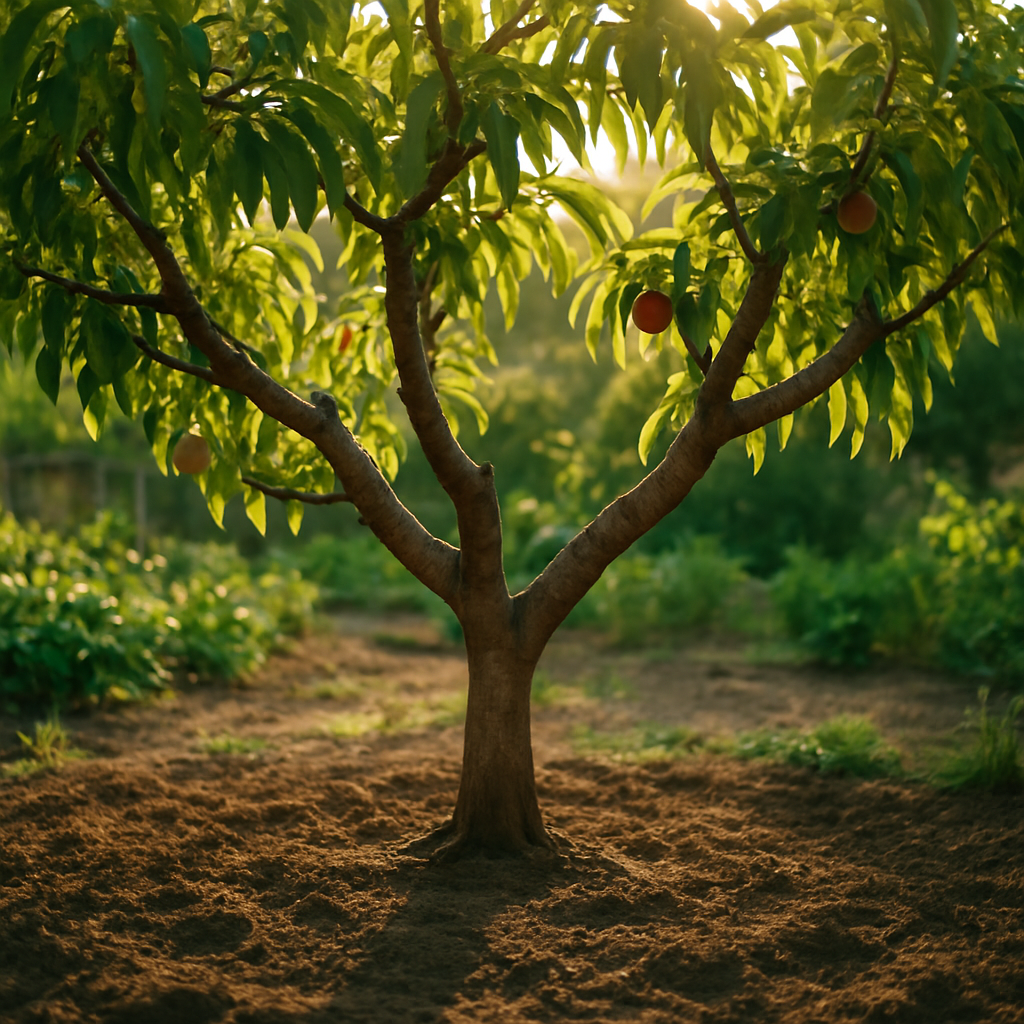
Open-center pruning — common on peaches, plums, and similar stone fruits — removes interior branches and trains the main limbs outward in a vase shape. The goal is airflow and disease resistance for the tree. The side effect is a window of direct sunlight that reaches all the way to the soil near the trunk. That's your growing space.
A densely canopied unpruned apple or pear can shade out nearly everything beneath it. But a well-pruned peach or plum creates reliable light pockets, especially in the center and between the main scaffold limbs. After your next winter pruning session, walk around the base and watch where sunlight hits the ground. That spot is where your container goes.
The container itself is not optional — it's structural to the method. Planting a tomato directly into the soil beneath a fruit tree puts both root systems in the same zone competing for the same water and nutrients. The tomato loses that competition almost every time. A bucket on the surface keeps everything separate.
Choosing the Right Tomato Variety
This is a vertical growing setup, so it only works with indeterminate varieties — tomatoes that keep growing and setting fruit upward throughout the season. Determinate (bush) varieties top out at a fixed height, set their fruit all at once, and won't climb a string effectively.
Two varieties that perform well in this setup:
- Super Sweet 100 — an indeterminate cherry tomato with strong disease resistance, high productivity, and a vigorous climbing habit. Reliable in containers and well-suited to string training.
- Sungold — another indeterminate cherry type with exceptional sweetness and a long production window through fall.
Both can produce into October in USDA Zone 7A when planted after last frost. Cherry tomatoes are also a practical choice because small fruit clusters put less stress on the string than large slicing varieties would.
Setting Up the Container
A food-safe 5-gallon bucket provides enough root volume to support a full-season indeterminate cherry tomato. Before filling it, drill six to eight drainage holes in the bottom — drainage is non-negotiable at this container size.
What to put inside:
- Fill with a quality container growing mix, not native garden soil. Garden soil compacts in containers and drains poorly.
- Work a dose of organic granular fertilizer into the top few inches at planting time.
- Place a drip tray beneath the bucket so runoff water can be reabsorbed from below, which helps keep moisture more consistent during hot weather.
Set the container directly over the light pocket you identified during pruning. You don't need to dig or disturb the tree's root zone — the bucket sits right on the surface.
Running the String Trellis
Once the tomato is 12–18 inches tall and outgrowing its starter stake — typically two to four weeks after transplant — it's time to run the string. Here's how to set it up:
- Identify a sturdy overhead branch thick enough to hold some weight without flexing under a climbing vine.
- Tie a length of strong tomato twine from that branch down to the bucket or a short stake at container level. Use a loose knot around the branch, not a wrapped loop — a tight string can cut into bark as the branch moves and expands through the season.
- Remove the original bamboo starter stake from the container once the string is in place. It's no longer needed.
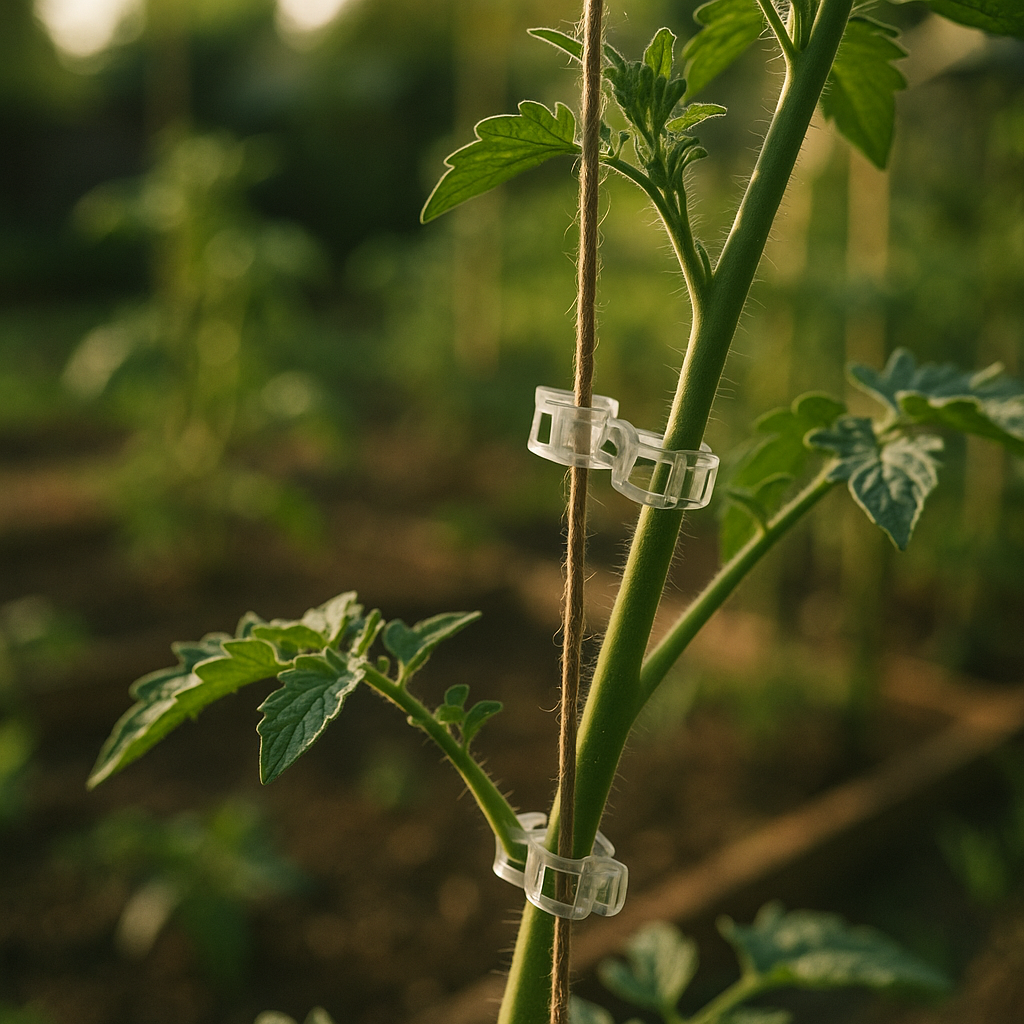
- Begin clipping the main stem to the string every 6–10 inches using tomato training clips. Clips can be repositioned without damaging the stem — avoid tape or twist ties.
- If you're running two plants under the same tree, tie each string to a separate branch so the vines don't crowd each other as they climb.
Check the branch tie two or three times during the season. Even a loose knot can tighten over a long summer.
Training and Pruning the Tomato as It Climbs
The goal in a container setup is one to three main stems climbing the string. More than that creates congestion, reduces airflow, and lowers fruit quality in a confined root space.
As the plant grows:
- Remove suckers that emerge in the crotch between the main stem and leaf branches. Even large suckers should come off — they redirect energy that belongs in upward fruit production.
- Strip lower leaves as the plant climbs, especially any foliage within 12 inches of the soil surface. This reduces the risk of fungal disease splashing up from the container mix.
- Clip new growth to the string every one to two weeks. Indeterminate varieties won't stop climbing on their own — they need consistent guidance or they'll sprawl off the string.
If the plant reaches the branch it's tied to before frost, either tie an extension string to a higher branch or pinch the growing tip. Pinching stops upward growth and signals the plant to put energy into maturing the fruit clusters already on the vine.
Feeding and Watering Through the Season
Container tomatoes dry out faster than in-ground plants, and a canopy overhead intercepts some rainfall. In temperatures consistently above 80°F, check soil moisture daily and water deeply — enough that water comes out the drainage holes — rather than giving the surface a light splash.
For feeding:
- At planting, work organic granular fertilizer into the top of the container mix.
- Roughly six to eight weeks after transplant, apply a top dressing of compost blended with organic fertilizer. A 5-gallon container has finite nutrition, and a fast-growing indeterminate will exhaust it by midsummer without intervention.
- In late summer, apply a second top dressing to carry the plant through fall production. In Zone 7A and similar climates, plan on at least two top-dressings total.
- Add shredded leaf mulch to the top of the container from July onward to retain moisture and moderate soil temperature.
Watch leaf color as your feeding signal. Yellowing lower leaves on an otherwise healthy plant often indicate nitrogen deficiency. Don't wait until production drops to respond.
Common Mistakes
Planting directly in the ground beneath the tree
This is the most common error with this method. Tree roots and tomato roots in the same soil zone will compete for water and nutrients — and the tomato almost always loses. The container is what makes the method work.
Choosing a determinate variety
Bush tomatoes top out and set all their fruit at once. They won't climb a string, and they won't produce through fall. Use indeterminate varieties only.
Tying the string too tightly around a live branch
A looped or cinched string can cut into bark over a full growing season as the branch moves and grows. Use a loose knot and check it at least twice during the season.
Letting too many stems develop
More than three main stems in a 5-gallon container creates crowding, reduces airflow, and limits fruit quality. Prune suckers early and decisively — it's easier to manage before they get large.
Skipping mid-season fertilization
A container runs out of available nutrition faster than garden soil. Without a mid-season top dressing, production often drops in late summer right when the plant should be ramping up for fall. Feed before you see distress, not after.
FAQs
Does this work under fruit trees other than peaches?
Yes. Any fruit tree pruned to an open or vase shape with enough light reaching the ground can support this method. The key factor is available sunlight at container level, not the tree species. A densely canopied unpruned tree won't work regardless of variety.
Won't the tomato compete with the tree for water and nutrients?
Not if it's in a container. That's exactly why the bucket matters — the root systems stay completely separate. Competition only happens if you plant the tomato directly in the ground beneath the tree.
How big does the container need to be?
A food-safe 5-gallon bucket with six to eight drainage holes in the bottom is sufficient for a full-season indeterminate cherry tomato. Place it in a drip tray to capture and reabsorb runoff.
When should I set this up?
Transplant the tomato after your last frost date, once nighttime temperatures are consistently above 50°F. Run the string to the tree when the plant is 12–18 inches tall — typically two to four weeks after transplant.
What if the plant outgrows the string before frost?
Either tie an extension line to a higher branch to give the vine more vertical room, or pinch the growing tip to stop upward growth and push energy into maturing the fruit clusters already on the lower portion of the vine.
Your Action Plan
Here's how to move from winter planning to fall harvest:
- This winter, during pruning: After pruning your fruit tree, walk the base and note where sunlight hits the ground. That's your container placement for spring.
- Six to eight weeks before last frost: Start indeterminate cherry tomato seeds indoors — Super Sweet 100 and Sungold are both reliable for this setup. Pot seedlings up as they grow to prevent rootbound transplants.
- At last frost date: Fill a food-safe 5-gallon bucket with quality container growing mix, work in organic granular fertilizer, transplant your seedling, and set a drip tray beneath the bucket. Place it over the light pocket under the tree.
- When the plant is 12–18 inches tall: Tie a string from a sturdy overhead branch down to the container. Remove the bamboo starter stake and begin clipping the main stem to the string. Strip lower leaves and remove suckers.
- Mid-season and again in late summer: Top-dress the container with compost and organic fertilizer. Add shredded leaf mulch. Water daily in hot weather and keep clipping new growth to the string — the vine will keep climbing until frost stops it.
Two harvests, one footprint. The fruit tree was already doing its job. Now the space underneath it can do the same.
Related blogs
Holes in your leaves? Here's the organic pest control system that matches the right tool to the right pest — before more damage is done.
August isn't too late — it's prime time for fall planting. Learn which crops to plant now, how to time them, and the tricks that actually work.
Mid-summer garden slump is normal — here's how to inventory what's still working and take action now for a strong fall harvest.
Still waiting on green tomatoes? These 5 practical methods shift your plant's energy toward ripening fruit faster — starting this week.
Skip the hilling, still get a real harvest. Here's how deep planting and one mid-season step make raised bed potatoes genuinely low-effort.
Too many tomatoes? Here are 6 practical ways to freeze, can, dry, and sauce your garden harvest so nothing goes to waste.
Break your raised bed into a simple grid and grow 2–3x more food from the same space. Here's exactly how to set it up.
No yard? No problem. Learn how to grow tomatoes, peppers, and more in 5-gallon buckets with the right soil, watering, and fertilizing strategy.
Wood chips can build incredible soil — or wreck a bed. One mistake makes all the difference. Here's what actually works.
Seeds from a fast food tomato can grow into a real plant — here's how to extract, germinate, and grow them successfully.