How to Prune Tomato Plants for Earlier, Bigger Harvests
Pruning your tomatoes the right way can bring fruit two weeks earlier. Here's how to spot suckers, train one strong stem, and stop leaving yield on the table.

How to Prune Tomato Plants for Earlier, Bigger Harvests
A big, bushy tomato plant feels like progress — but it can quietly work against you. When a tomato plant branches in every direction, it pours energy into stems and leaves instead of ripening fruit. The fix is straightforward: remove suckers, train the plant upward, and keep the structure clean. Done consistently, this one habit can bring your first harvest roughly two weeks earlier than an unpruned plant growing right beside it.
Quick Answer
Pruning tomato plants means removing "suckers" — the new shoots that grow from the V-shaped crotch between the main stem and a leaf branch — so the plant focuses its energy on fruiting rather than leafy growth. For indeterminate varieties, training one main stem vertically and pinching off suckers every 5–7 days can bring fruit in approximately two weeks earlier than unpruned plants. Start by removing any leaves that touch the soil, then pinch small suckers by hand while they're still finger-width. Even partial pruning meaningfully redirects plant energy toward fruit.
What Is a Tomato Sucker?
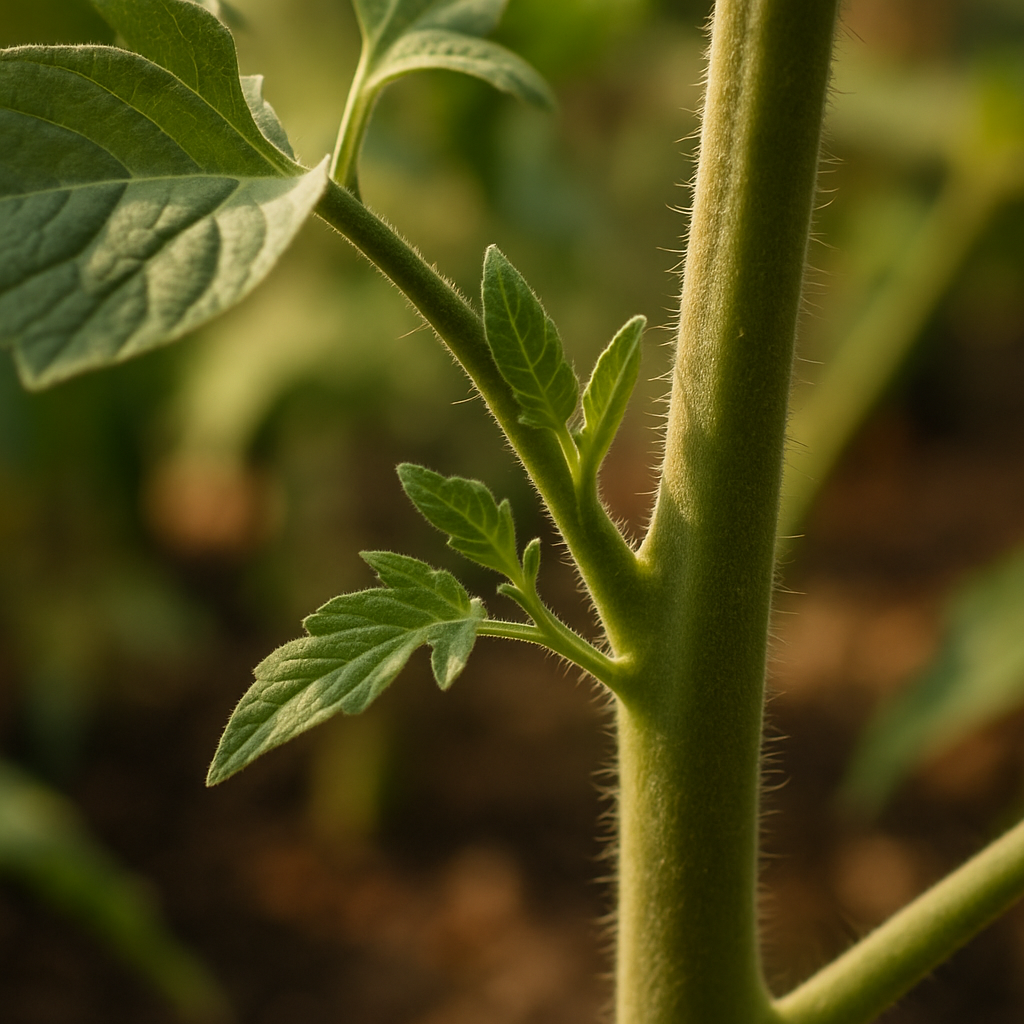
A sucker is a new shoot that sprouts from the V-shaped junction between the main stem and a leaf branch. Left alone, it becomes a full vine — with its own leaves, flowers, and suckers of its own. On an indeterminate tomato, one plant can develop dozens of suckers and turn into a dense, tangled mass by midsummer.
More stems means more leaf mass, slower airflow, slower ripening, and a much higher risk of fungal disease. The plant isn't doing anything wrong — it's just growing the way it's built to grow. Your job is to channel that growth toward the fruit you're after.
Indeterminate vs. Determinate: Does Pruning Apply to Both?
Indeterminate varieties — most heirlooms, beefsteaks, and many cherry types — keep growing and setting fruit all season long. These benefit the most from aggressive sucker removal and vertical training.
Determinate varieties are more compact and stop growing at a set height. They still benefit from lower-leaf removal, but heavy sucker pruning isn't necessary and can actually reduce their yield. If you're not sure which type you're growing, check the seed packet or plant tag. When in doubt, treat it as indeterminate.
The Basic Pruning Method: Training One Main Stem
This is the foundation of intentional tomato pruning — one main stem growing straight up, with suckers removed as they appear. Work through these steps in order.
- Sanitize your tools first. Wipe pruning shears or scissors with isopropyl alcohol before you start and before moving from plant to plant. A blade that carries early blight or mosaic virus can infect every plant it touches.
- Remove lower leaves that contact the soil. These are the most common entry points for soil-borne fungal diseases like early blight. Do this step regardless of how aggressively you plan to prune — it applies to every tomato plant you're growing.
- Scan the entire plant for suckers. Start at the base and work upward. Look for any new shoot growing from the angled crotch between the main stem and a leaf branch. Once you see the pattern once, it's easy to spot everywhere.
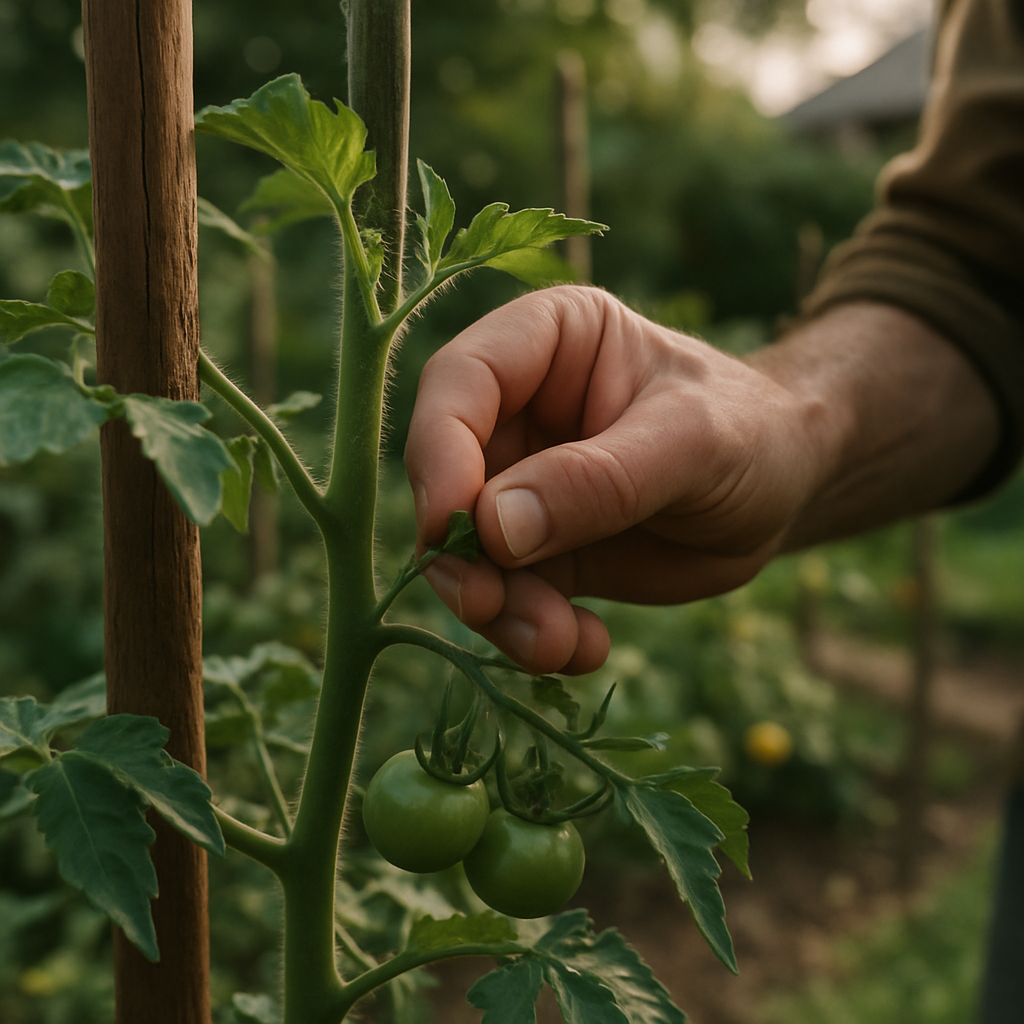
- Pinch small suckers out by hand. If a sucker is still pencil-width or smaller, snap it off cleanly with your fingers. No tools needed, and it's the least stressful removal for the plant.
- Use clean pruners for larger suckers. Anything past finger-width needs a clean cut rather than a tear. Cut close to the main stem without nicking into it.
- Tie the main stem to your support. A stake, trellis, or garden clip all work. The stem should be secured at intervals as it climbs, not flopping under its own weight.
Check your plants every 5–7 days during active summer growth. Suckers emerge fast, and a small one takes seconds to remove — that same sucker a week later requires tools and leaves a much larger wound.
A sturdy support structure makes vertical training significantly easier to maintain. The FlexGrow Tomato Cage - 16.5" Square is built to handle heavy indeterminate vines, with stackable height so your support system can grow with the plant.
Advanced Technique: Letting a Sucker Work for You
Once your plants are established and flowering, strict single-stem pruning isn't the only option. A small number of deliberately kept suckers can add fruit without letting the plant lose its shape.
Controlled Sucker Fruiting
Allow one sucker to grow until it produces a flower cluster. Then pinch it just above that fruit set and remove any sub-suckers that develop from it. That short branch fruits and stops — it doesn't keep expanding into a second full vine. The result is a bonus cluster of tomatoes with minimal added complexity to manage.
This works particularly well with large-fruited varieties. A single managed side branch on a Beefsteak Tomato plant can add meaningful weight to your total harvest without the sprawl of an unpruned vine.
Using Foliage to Prevent Sun Scald
In high-sun climates or during a heat wave, exposed fruit can develop sun scald — pale, papery patches caused by direct sun on the skin. Allowing one or two suckers near the fruiting zone to grow a few leaves provides natural shade cover. This is one case where a little sucker growth is doing real, useful work.
What to Do When Pruning Has Been Neglected
If your plants are already large and bushy, don't try to fix everything in one session. Removing most of the leaf mass at once — especially in hot weather — is a serious stress event that can halt fruit set and leave the plant struggling to recover.
Take a gradual approach instead:
- Remove all small suckers immediately.
- Identify the largest, most problematic suckers — especially those growing toward the ground or inward where airflow is worst.
- Remove one large sucker per plant per day, giving the plant time to adjust between sessions.
- Aim to reduce to two or three manageable stems, not a perfect single stem. That's still a meaningful improvement.
Don't throw away the large suckers you remove. Place the cut end in a jar of water for a few days until roots develop, then transplant — or push the cutting directly into moist potting mix. Tomato suckers root readily and give you free plants mid-season, which is a simple way to extend your harvest window if you have the space.
The Case for Growing Tomatoes Vertically
Pruning and vertical training work together. A pruned, single-stem tomato can grow at roughly one plant per square foot. An unpruned bush plant needs four or more square feet — and still produces fruit later.
Higher plant density means more variety in the same bed, built-in backup if one plant is lost to disease or pests, fruit at a comfortable picking height, and better light and airflow through the canopy. The trade-off is lower yield per individual plant, but total yield per square foot typically goes up. For small gardens, that math almost always favors vertical growing.
As plants grow taller than your support, you can "lower and lean" the vine — gently dropping it along the trellis at a diagonal angle, like a snake traversing downward, then continuing to train it upward from a new anchor point. Tomato vines handle this approach well.
If you're growing a mix of tomato sizes and colors, Mix Cherrylicious Tomatoes are well-suited to vertical training — their vigorous, indeterminate vines respond to consistent pruning and produce fruit across a long season.
Common Mistakes
Waiting Too Long to Remove Suckers
A sucker that's still finger-sized takes a few seconds and zero tools to remove. That same sucker a week later requires pruners, leaves a larger wound, and causes more plant stress. Set a weekly check as a standing habit during summer.
Removing Everything at Once on a Bushy Plant
Stripping a heavily overgrown plant in a single session can shock it badly, especially in hot weather. Phase the work over several days and let the plant stabilize between sessions.
Ignoring Lower Leaves
Even if you decide not to prune heavily, any leaf that contacts the soil should come off. Soil splashing onto lower leaves during rain or watering is one of the most reliable ways fungal disease gets started. This step is non-negotiable.
Skipping Tool Sanitation Between Plants
One unwashed blade can carry disease across your entire tomato bed. Keep isopropyl alcohol within arm's reach and wipe the blade before each new plant — make it a reflex, not an afterthought.
Pruning at the Hottest Part of the Day
Fresh cuts in peak afternoon heat are harder for the plant to recover from. Prune in the morning or evening when temperatures are cooler and the plant isn't already under heat stress.
FAQs
Does pruning work on all tomato varieties, or just indeterminate types?
Lower-leaf removal applies to every tomato plant regardless of type. Aggressive sucker removal and single-stem training is most beneficial for indeterminate varieties, which keep growing all season. Determinate types are self-limiting and don't need heavy sucker pruning — but still benefit from removing their lowest leaves.
My plants are already huge and bushy. Is it too late to prune?
It's not too late, but go gradually. Reduce the sucker load slowly over several days rather than cutting everything back at once. Even bringing a heavily bushy plant down to two or three managed stems will improve airflow and help ripen the fruit that's already on the plant.
How do I tell the main stem from a sucker?
Start at the soil and follow the central stem growing straight upward — that's your main stem. Any new shoot emerging from the angled crotch between that stem and a leaf branch is a sucker. Once you see the pattern on one plant, you'll recognize it instantly on the rest.
Can I do anything useful with the suckers I remove?
Yes. Larger suckers root easily as cuttings. Place the cut end in water for a few days until roots develop, then transplant into soil — or push the cutting directly into moist potting mix. It's one of the simplest ways to get free plants mid-season.
Will pruning reduce my tomato harvest?
Done correctly and gradually, pruning redirects plant energy from leaf production toward fruit, which typically improves both timing and fruit quality. The real risks are removing too much at once or pruning during peak heat. Light, consistent pruning done every week is very forgiving and rarely causes problems.
Your Action Plan This Week
- Walk every tomato plant and remove any leaves touching or nearly touching the soil. Do this regardless of how much pruning you plan to do — it's the single most impactful disease-prevention step available to you right now.
- Sanitize your pruners or scissors with isopropyl alcohol before you start and between each plant. Make wiping the blade a habit from here forward.
- Identify all visible suckers and remove any that are still small by hand. For larger suckers on overgrown plants, remove one per plant per day over the next several days rather than all at once.
- Tie the main stem of each indeterminate plant to a stake or trellis if you haven't already. Check ties weekly and add new ones as the plant climbs.
- Pick one plant to prune intentionally and leave one nearby as an unmanaged comparison. Observe the difference in growth habit, airflow, and fruit timing over the next four to six weeks. Seeing it side-by-side in your own garden is the best teacher there is.
Related blogs
Holes in your leaves? Here's the organic pest control system that matches the right tool to the right pest — before more damage is done.
August isn't too late — it's prime time for fall planting. Learn which crops to plant now, how to time them, and the tricks that actually work.
Mid-summer garden slump is normal — here's how to inventory what's still working and take action now for a strong fall harvest.
Still waiting on green tomatoes? These 5 practical methods shift your plant's energy toward ripening fruit faster — starting this week.
Skip the hilling, still get a real harvest. Here's how deep planting and one mid-season step make raised bed potatoes genuinely low-effort.
Too many tomatoes? Here are 6 practical ways to freeze, can, dry, and sauce your garden harvest so nothing goes to waste.
Break your raised bed into a simple grid and grow 2–3x more food from the same space. Here's exactly how to set it up.
No yard? No problem. Learn how to grow tomatoes, peppers, and more in 5-gallon buckets with the right soil, watering, and fertilizing strategy.
Wood chips can build incredible soil — or wreck a bed. One mistake makes all the difference. Here's what actually works.
Seeds from a fast food tomato can grow into a real plant — here's how to extract, germinate, and grow them successfully.